Knowledge
Which Hallmarks of Aging can be addressed with HBOT
Reading time:
1
min.
Created:
Last update:
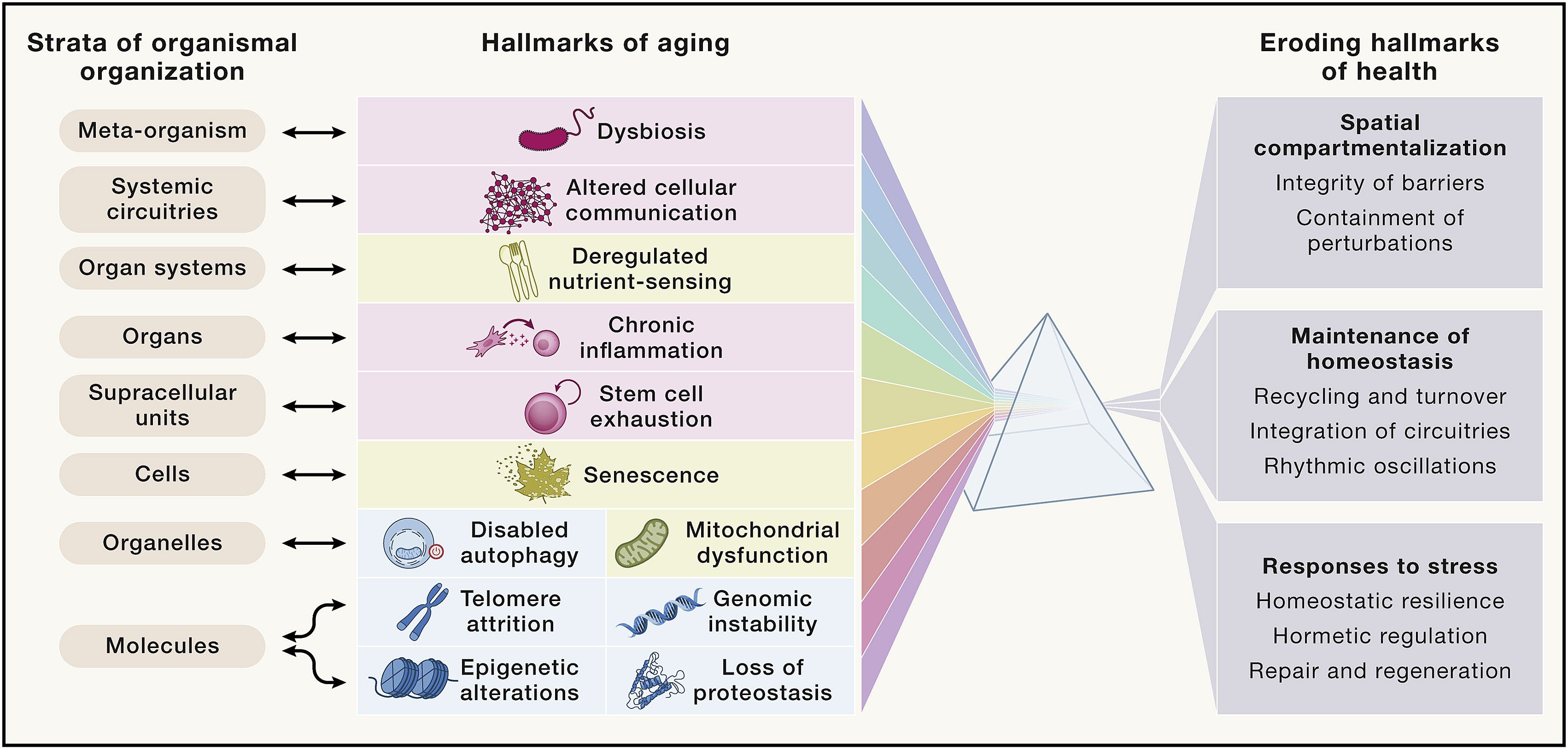
Hallmarks of Aging and Hyperbaric Oxygen Therapy (HBOT)
The "Hallmarks of Aging" are nine central biological processes that drive aging at the cellular level. Based on current studies, Hyperbaric Oxygen Therapy (HBOT) can positively influence several of these hallmarks. HBOT works through intermittent hyperoxia (increased oxygen supply under pressure), which triggers adaptive responses in the body—similar to hypoxia or hormesis (e.g., through exercise or caloric restriction). This leads to effects such as the reduction of oxidative stress, the promotion of antioxidants, and the activation of key factors like HIF-1α.
Here is an overview of the addressable hallmarks (based on clinical and preclinical studies). Not all are influenced with the same intensity or directly; some effects are indirect. I have listed them with their mechanisms and evidence:
Hallmark (characteristic) | Addressing by HBOT | Mechanisms and evidence |
|---|---|---|
Telomere attrition (shortening of telomeres) | Yes, telomere length increased by >20% | HBOT stimulates regenerative processes via the hyperoxia-hypoxia paradox, reduces oxidative stress and promotes antioxidants. Study: In 30 healthy elderly people (≥64 years) after 60 HBOT sessions (2 ATA, 100% O₂), telomere length in blood cells (e.g. B cells) increased by 37.6%. |
Cellular senescence (accumulation of senescent cells) | Yes, reduction of 10–37% | Senolytic effects: Clearance of senescent cells through immune mediation and reduction of markers (e.g. p16, p21, SA-β-Gal). Blocks SASP (senescence-associated secretory phenotype). Evidence: Clinical study showed -37% senescent T helper cells after HBOT. |
Mitochondrial dysfunction | Yes, improvement in function | Increases oxygen utilisation, mitochondrial biogenesis and redox enzymes. Evidence: In TBI patients, HBOT (1.5 ATA) improved oxidative metabolism and mitochondrial capacity. |
Genomic instability | Yes, indirectly through reduction of oxidative damage | Upregulation of antioxidants (e.g. via NRF2) minimises ROS-induced DNA damage. Evidence: HBOT increases endogenous antioxidants and protects against cellular damage. |
Epigenetische Veränderungen | Yes, indirectly | Modulation of HIF-1α and SIRT1 influences epigenetic pathways. Evidence: HBOT increases HIF-1α and SIRT activity, leading to epigenetic stabilisation. |
Loss of proteostasis (disruption of protein balance) | Ja, indirectly | Upregulation of cytoprotective genes (e.g. HO-1, proteasomes) improves protein degradation and folding. Evidence: In cells (e.g. endothelial cells), HBOT (2.4 ATA) induces resistance to oxidative stress via Nrf2 targets. |
Deregulated nutrient sensing (nutrient sensor dysfunction) | Ja, indireclty | HIF-1α modulates mTOR and insulin signals, improving glucose metabolism. Evidence: HBOT reduces insulin resistance in rats and improves glucose control in older people. |
stem cell exhaustion | Ja, indireclty | Promotes mobilisation and proliferation of stem cells via HIF-1α and VEGF. Evidence: HBOT stimulates stem cell growth, angiogenesis and neurogenesis. |
Altered intercellular communication | Ja, indireclty | Reduces inflammation (inflammaging) and SASP; modulates transcription factors (HIF-1α, NF-κB, NRF2). Evidence: HBOT attenuates pro-inflammatory cytokines and promotes vascular homeostasis. |
Summary: HBOT primarily addresses telomere attrition and cellular senescence directly and with strong evidence, while other hallmarks (e.g., mitochondrial dysfunction, inflammation) are indirectly influenced via oxygen-dependent pathways. There is no evidence of negative effects in controlled protocols (e.g. 2 ATA, 60–90 min/session).
‘The above summary is based on a response from the AI system Grok (version Grok 4, developed by xAI), queried on 27 November 2025.’
Authors