Knowledge
Which hallmarks of aging are being studied in connection with HBOT?
Reading time:
1
min.
Created:
Last update:
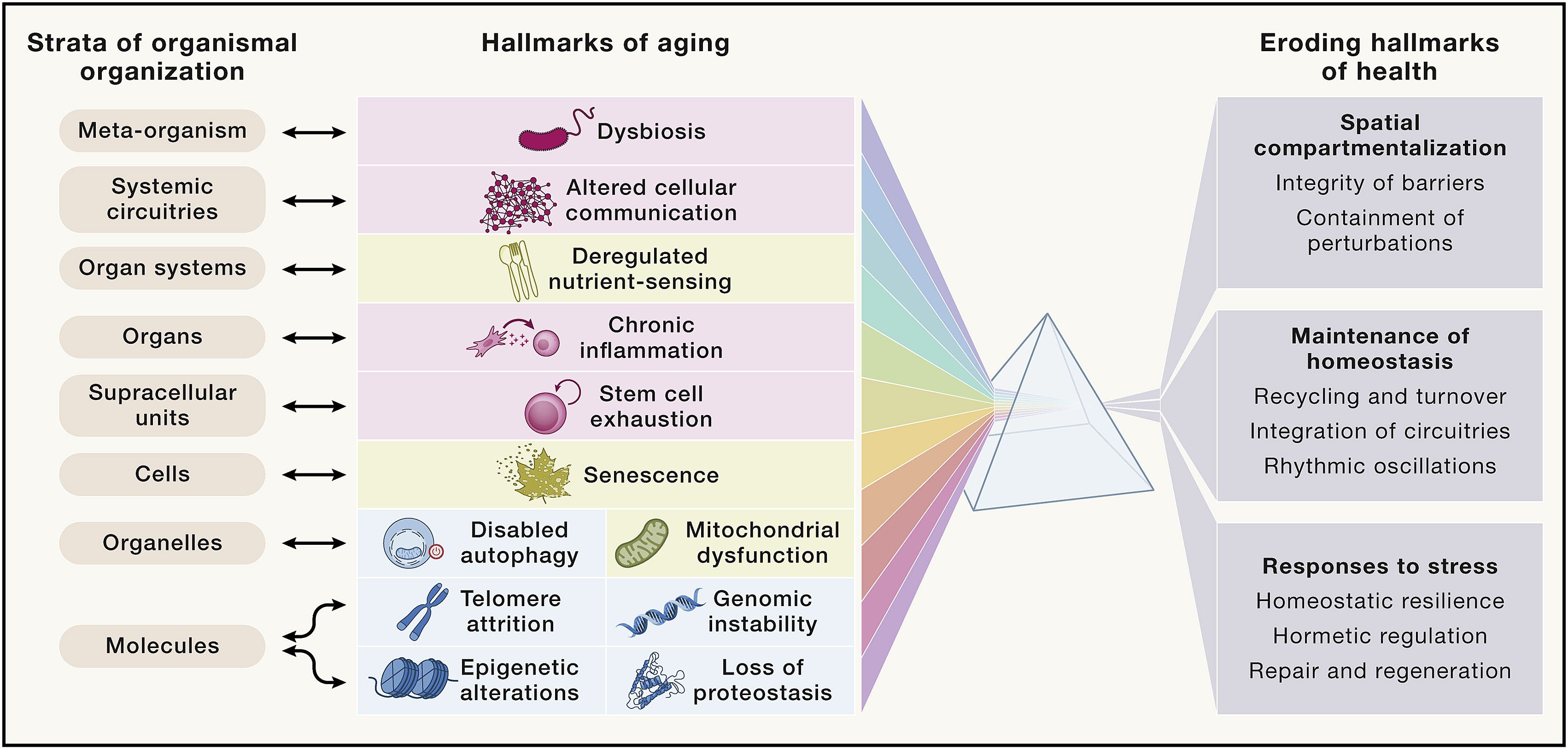
Hallmarks of Aging and Hyperbaric Oxygen Therapy (HBOT)
The “hallmarks of aging” describe central biological processes associated with aging at the cellular level (originally nine, twelve since the 2023 update). Studies are examining whether hyperbaric oxygen therapy (HBOT) can influence some of these hallmarks. Intermittent hyperoxia (increased oxygen supply under pressure) is discussed as a possible mechanism that – similar to hormesis through exercise or caloric restriction – could trigger adaptive responses, such as activation of antioxidant systems and of factors like HIF-1α.
The following overview summarises which hallmarks have been studied in connection with HBOT in clinical and preclinical studies. Many of the links mentioned are indirect or have only been described preclinically:
Hallmark (characteristic) | Link in studies | Discussed mechanisms and state of research |
|---|---|---|
Telomere attrition (shortening of telomeres) | Studied: in a single-arm study, telomere length in blood cells increased by >20% | The hyperoxia-hypoxia paradox is discussed as a mechanism. Study (Hachmo et al., 2020; single-arm, no control group): in healthy older people (≥64 years; 30 completed the study), telomere length in blood cells (e.g., B cells) increased by up to 37.6% after 60 HBOT sessions (2 ATA, 100% O₂). |
Cellular senescence (accumulation of senescent cells) | Studied: in the same study, senescent T cells decreased by approx. 11–37% | Senolytic effects are discussed. Study (Hachmo et al., 2020): the proportion of senescent T helper cells (CD4⁺CD28⁻) decreased by 37.3% after completion of the HBOT series; there was no control group. |
Mitochondrial dysfunction | Studied | Discussed: influence on oxygen utilisation, mitochondrial biogenesis and redox enzymes. State of research: changes in oxidative metabolism were reported in patients after traumatic brain injury (HBOT 1.5 ATA). |
Genomic instability | indirectly discussed (via oxidative damage) | Discussed: upregulation of antioxidant systems (e.g., via NRF2) could influence ROS-induced DNA damage. State of research: mostly preclinical. |
Epigenetic alterations | indirectly discussed | Discussed: modulation of HIF-1α and SIRT1 as a possible influence on epigenetic pathways. State of research: mostly preclinical; direct evidence in humans is lacking. |
Loss of proteostasis (disruption of protein balance) | Ja, indirectly | Discussed: upregulation of cytoprotective genes (e.g., HO-1). State of research: in cell experiments (endothelial cells, 2.4 ATA), increased resistance to oxidative stress via Nrf2 target genes was described. |
Deregulated nutrient sensing (nutrient sensor dysfunction) | Ja, indireclty | Discussed: influence of HIF-1α on mTOR and insulin signalling. State of research: animal studies (rats) and small human studies report changes in insulin resistance or glucose levels. |
stem cell exhaustion | Ja, indireclty | Discussed: mobilisation of stem cells via HIF-1α and VEGF. State of research: studies report increased numbers of circulating stem cells and markers of angiogenesis; the relevance for aging is unclear. |
Altered intercellular communication | Ja, indireclty | Discussed: influence on inflammatory markers and transcription factors (HIF-1α, NF-κB, NRF2). State of research: changes in pro-inflammatory cytokines were mainly described in preclinical and small clinical studies. |
Summary: In humans, telomere length and cellular senescence in blood cells have been studied most directly – in small, single-arm studies without a control group. Other hallmarks (e.g., mitochondrial dysfunction, inflammation) are discussed as indirectly influenceable, mostly on the basis of preclinical data. HBOT can have side effects (e.g., ear barotrauma); its use should be clarified individually.
‘The above summary is based on a response from the AI system Grok (version Grok 4, developed by xAI), queried on 27 November 2025.’
Note: This article reflects third-party studies and testimonials. Our devices are not medical devices; we make no claims of healing or efficacy.
Authors